
This is a big achievement considering me myself didn’t have high hope for its survival. Is it the best strategy? No, I doubt so. The profit is too small compared to what most people wants in their mind. This post will just be a list of what I think made the bot be able to past 3 years mark, which no one else can achieve based of publicly-shared result. I have repeated this list several times on FT’s discord server, so it might not be new to some of you. Most of the points below has been mentioned and explained here.
- Trade only the top marketcap pairs
- Low roi, which in my case is 1% fixed roi
- Long only, 1x leverage.
- Strict entries
- No percentage-based stoploss
- Losing exit signals, which would acts as entry filter as well
- No extra entries, no trade adjustments, no custom stake calculation
Point 1, 2 and 4 has been explained on the linked post above.
Let’s talk about point 3. Why do I choose to only have long trades? It’s simple. Trading only 1 direction is already a hard task for most retailers. Trading both directions means double the risks and uncertainty.
Why 1x leverage? It’s tied to point 5, where I don’t have stoploss. I believe my trade can go as low as it wants, but it will bounce back up. To allow such low dip, I can’t use any leverage at all to avoid being liquidated.
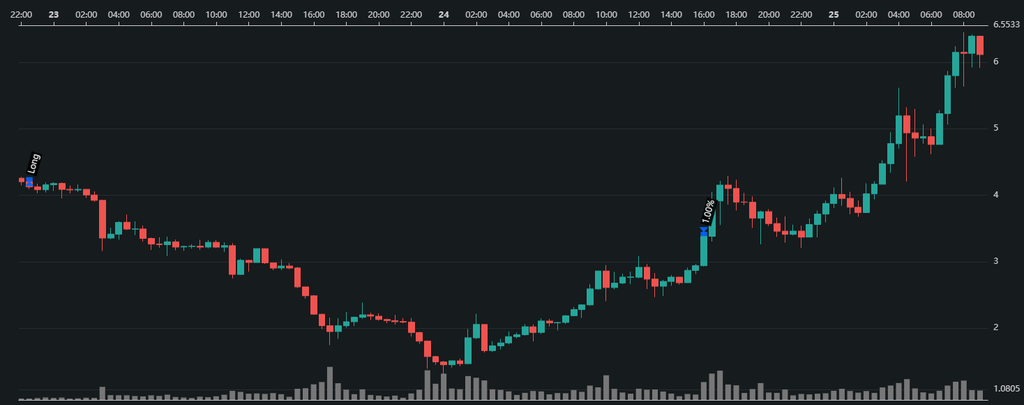
Now move on to point 5. Why am I not using stoploss? This is strictly based of experience so far and nothing scientific. This strategy rarely trade. The gap between trades can be as far as months. But once a suitable condition exist, it can suddenly open trades in a burst.That’s why its average trade statistic of 1 trade every 3 days can be misleading. In general I expect my money to sit passively in the wallet. If that’s the case, and based of past trades that showed me that all past losing trades would closed in roi if I waited, why would I take a loss if I can just wait and exit in profit? Especially since there is no rush for me to have the money available in the wallet. As said, this is purely based of experience, so don’t ask me the scientific explanation for it. All I know is my entries so far were good enough that the low 1% roi would always be met if the strategy would just wait.\
Now let’s talk about point 6, which I observed not a lot of people are using. Most people put their losing exit logics on custom_exit or custom_stoploss or adjust_trade_position, which is fine if all their purpose is to exit bad trade. But I want my exit logics to also work to filter out bad signals. I think it’s better to have charts so it’s easier to show what I mean.
This is the 30m timeframe chart of DEXE/USDT:USDT pair on Binance futures around 21-27 July 2026.
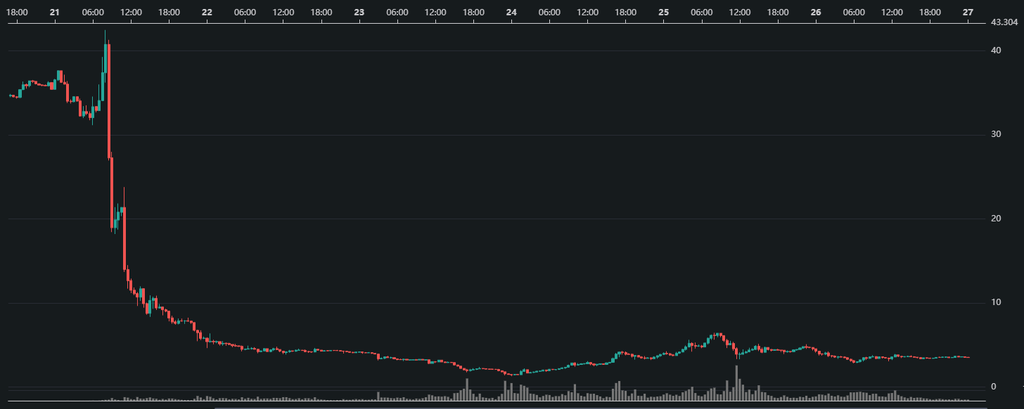
Most mean reversion strategies would have entered on either the first or the second red candles there. The chart below (where I added the entry signals) show my strict entries
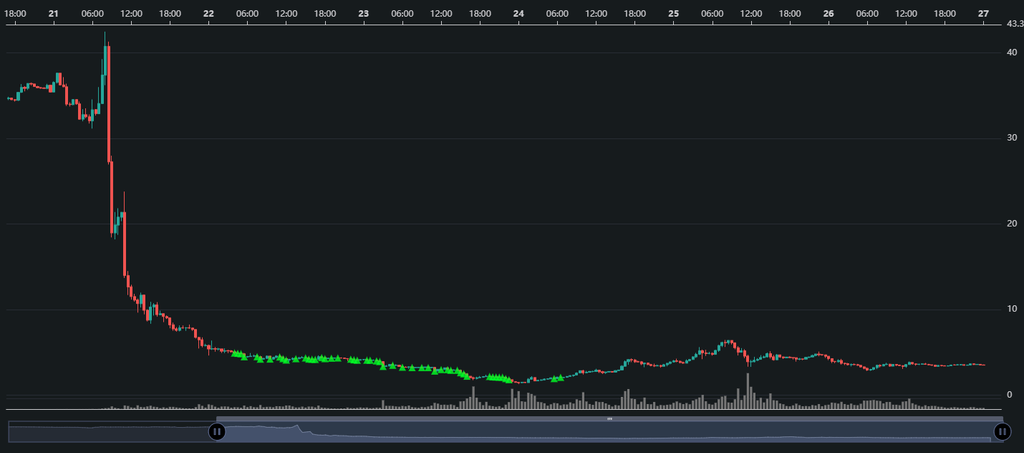
As you can see. the entry signals only triggered once the dip was less volatile. But even if there was one or two loose signals, my exit signals would act as entry rejection, as shown in the chart below (zoomed in)
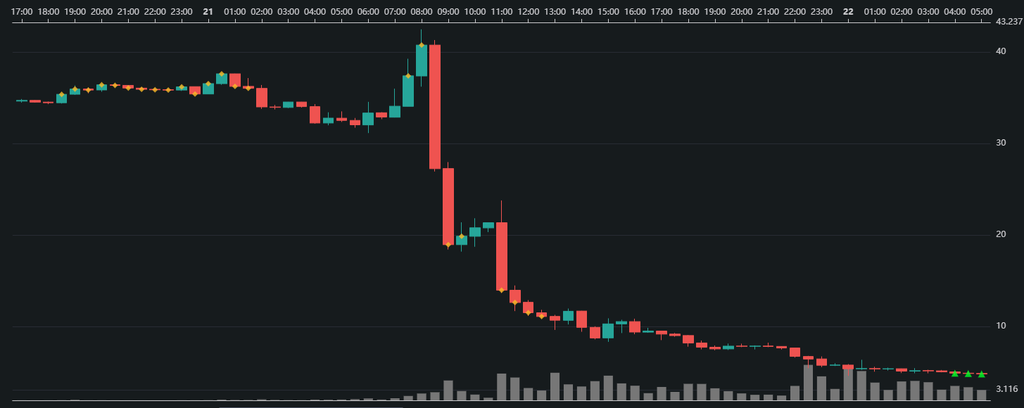
As you can see, the exit signals helped to stop any loose entries from entering on too-volatile situation. Next, the chart below showed how my 1% roi works
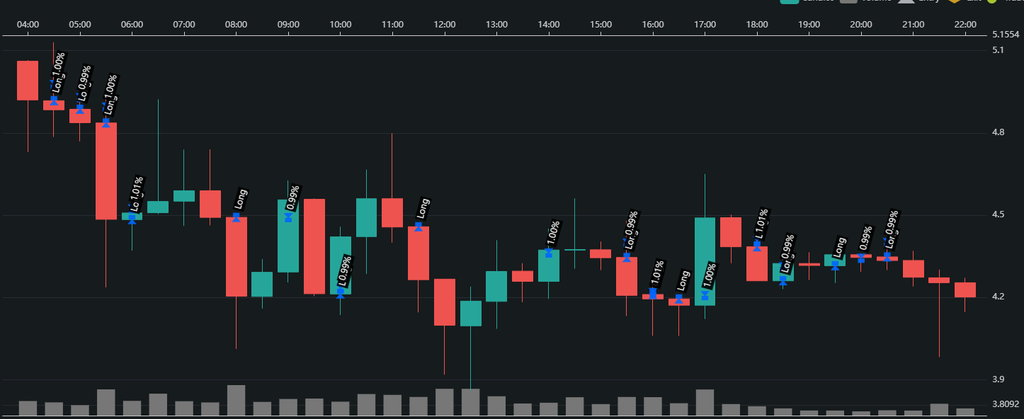
Almost all of the trades were exited in the same candle. Yes, I might have left a lot of profits on the table. But realized profit is always better than imaginative-profit-which-turned-into-losses. And the chart below (in hindsight) showed why I don’t use stoploss
In term of triangle of trading, this strategy is located near the “High win rate” end. It put less emphasize on the trade count and profit %.
I’ll either update this post or write new one once either the bot reached 5 years or it finally go bust, whichever happens first
[…] My bot survived 3 years […]